

Diacetyl and related 1,2-diones—common in flavor formulas used in food and beverage manufacturing—pose severe respiratory risks, including popcorn lung (Bronchiolitis Obliterans) even at extremely low concentrations. Standard SDS sheets often fail to disclose these risks, leaving your employees exposed and your organization vulnerable to regulatory and legal consequences - see our article in "Industrial Hygiene in the Workplace" for more details.
The fumigants Ethylene Oxide (ETO) and Sulfuryl Fluoride are both commonly used in agriculture. Neither have an odor at harmful concentrations, and can be easily trapped in packaging materials. ETO, especially, is known to outgas from packaging long after long after leaving the sterilization facility. The US EPA has recently shown that ETO is far more hazardous than originally thought. Please see our blog and press release for details.
We also offer accredited tests for Acetic Acid and Ethanol. If you have a specific need, please don't hesitate to contact us - we develop custom tests and can have these accredited if necessary.

Our offering was motivated by a recent NISOH report that describes the studies that lead to new lower RELs: 5 ppb for diacetyl for an 8 h workday and 25 ppb for 15 min. Our method is improved beyond the original OSHA methods 1012/1016 and achieves higher sensitivities using thermal desorption GC-MS with SIMS detection.
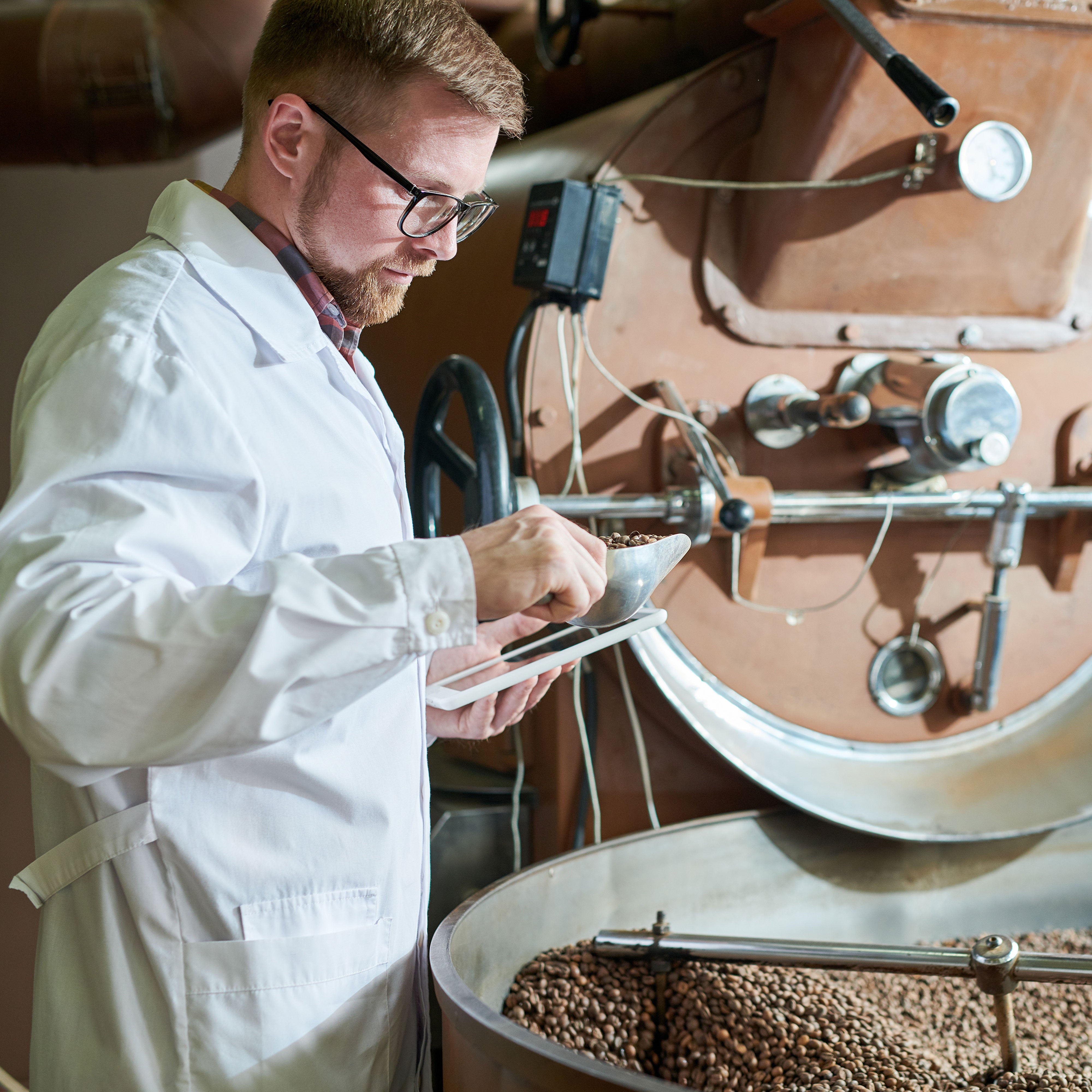
Diacetyl is only one of a series of 1,2-dione containing substances that are used as food flavorings, mixtures of which give foods characteristic smells. For example, 2,3-pentanedione is found in alarming concentrations during the grinding of roasted coffee beans, and should likely be controlled in coffee roasteries and coffee shops. It’s interesting that these substances smell like butter alone, but when mixed in different proportions can take on entirely different smells. For example, we have generated the smell of yogurt here in the lab, which is a mixture of diacetyl, acetoin, and 3,4-hexanedione.
Shop 1,2-Diones
Uses of ethylene oxide (ETO) include sterilizing packaging and equipment in aseptic processing lines, especially for heat-sensitive items like plastic pouches, caps, and valves. Decontaminating dry ingredients (e.g., spices, herbs, seeds) to reduce microbial load without moisture damage Sanitizing filters and flexible tubing used in high-hygiene food production environments.
Our ETO test uses the industry standard SKC ETO air sampler, analyzed by a modified version of the OSHA method 1010 that uses GC-MS with SIMS detection.
Sulfuryl Fluoride in Food & Beverage.
Common uses include fumigating grain silos, warehouses, and processing facilities to control insects, rodents, and mold. Also, consider treatments for exported or imported food products and packaging. Sulfuryl fluoride can persist in treated materials and enclosed spaces after fumigation. Chronic exposure may impact neurological health, and strict limits apply for safe re-entry and handling.
Our test for sulfuryl fluoride uses the NIOSH 6012 method with detection of the entire mass of sulfuryl fluoride, including both products of its hydrolysis, fluoride and fluorosulfonate, providing extra certainty in its detection
Shop Sulfuryl Fluoride
